The State Of Sustainability For Kid’s Brands (As Seen on Playtime)
Sustainability is a topic on everyone’s mind today. Whether a brand, buyer, expert, or a consumer, the climate crisis is something none of us can consciously ignore. Especially as professionals within the kid’s market, we are dedicated to the little ones who will inherit the planet and the choices we’ve made. With the arrival of Earth Day this year, Playtime wanted to explore the state of sustainability within the kid’s market. In speaking with a few brands like MOMIJI, buyers, and experts from our international community, you can read their full feature here.
BE THE BEST BRAND YOU CAN BE
As anyone who’s tried to incorporate sustainability into their own life can relate to, brands are all doing their best. There are endless avenues for improvement, as well as for success. Sustainability isn’t about achieving something and stopping — it’s about continuous improvement. Regardless of their methods, their terminology, or their view on certifications, all of the brands we spoke to believe sustainability is a continuous journey. “I always like to think about commitment as a verb, an action. It is built every day. We need to be there practicing it, driven by a strong sense of purpose,” said Cecilia, who is responsible for Innovation & Sustainability at the brand Bobo Choses. Sustainability for kid’s brands is full of challenges, and each finds their own way of responding to them.

What does sustainability look like for these kid’s brands?
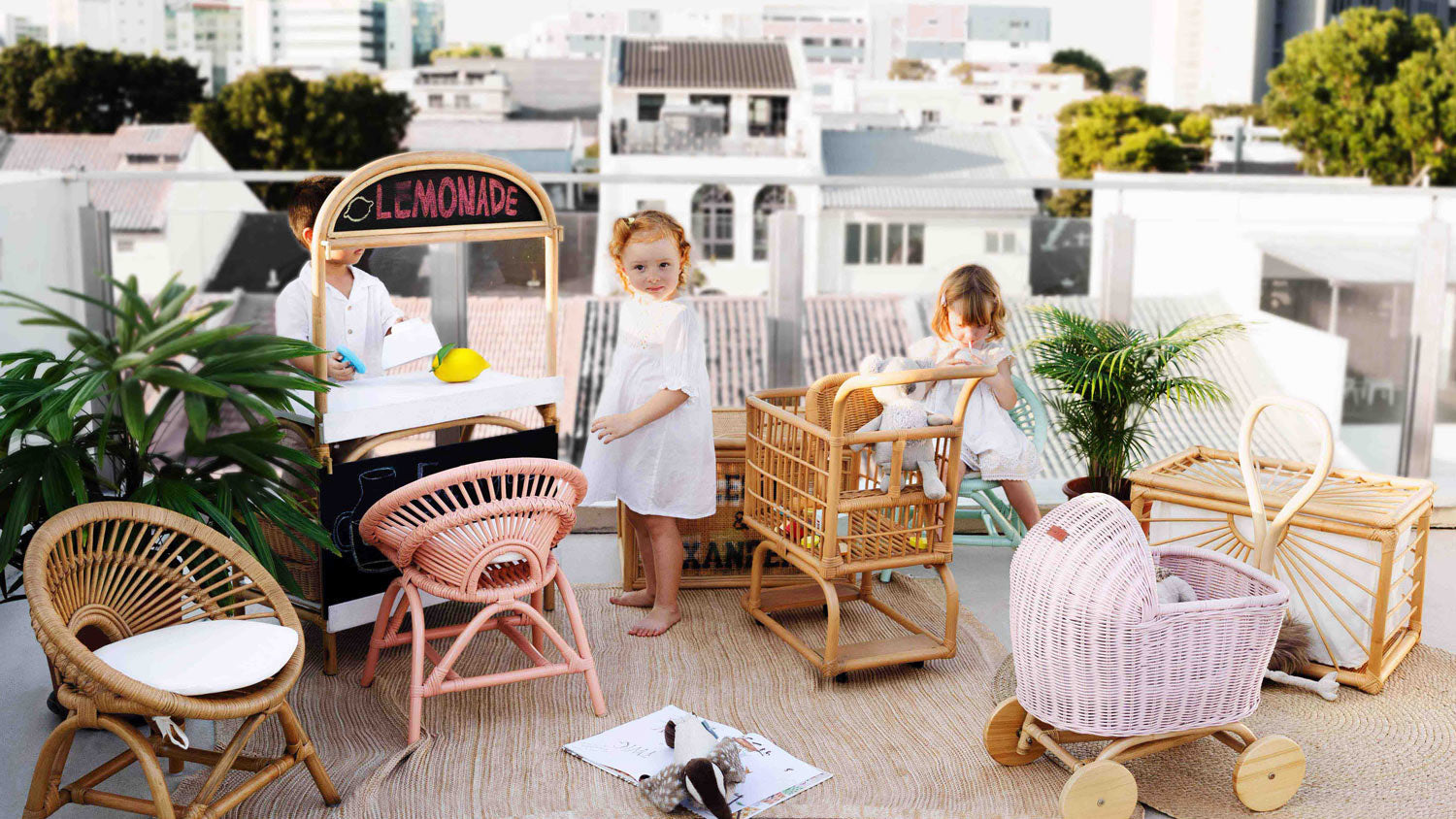
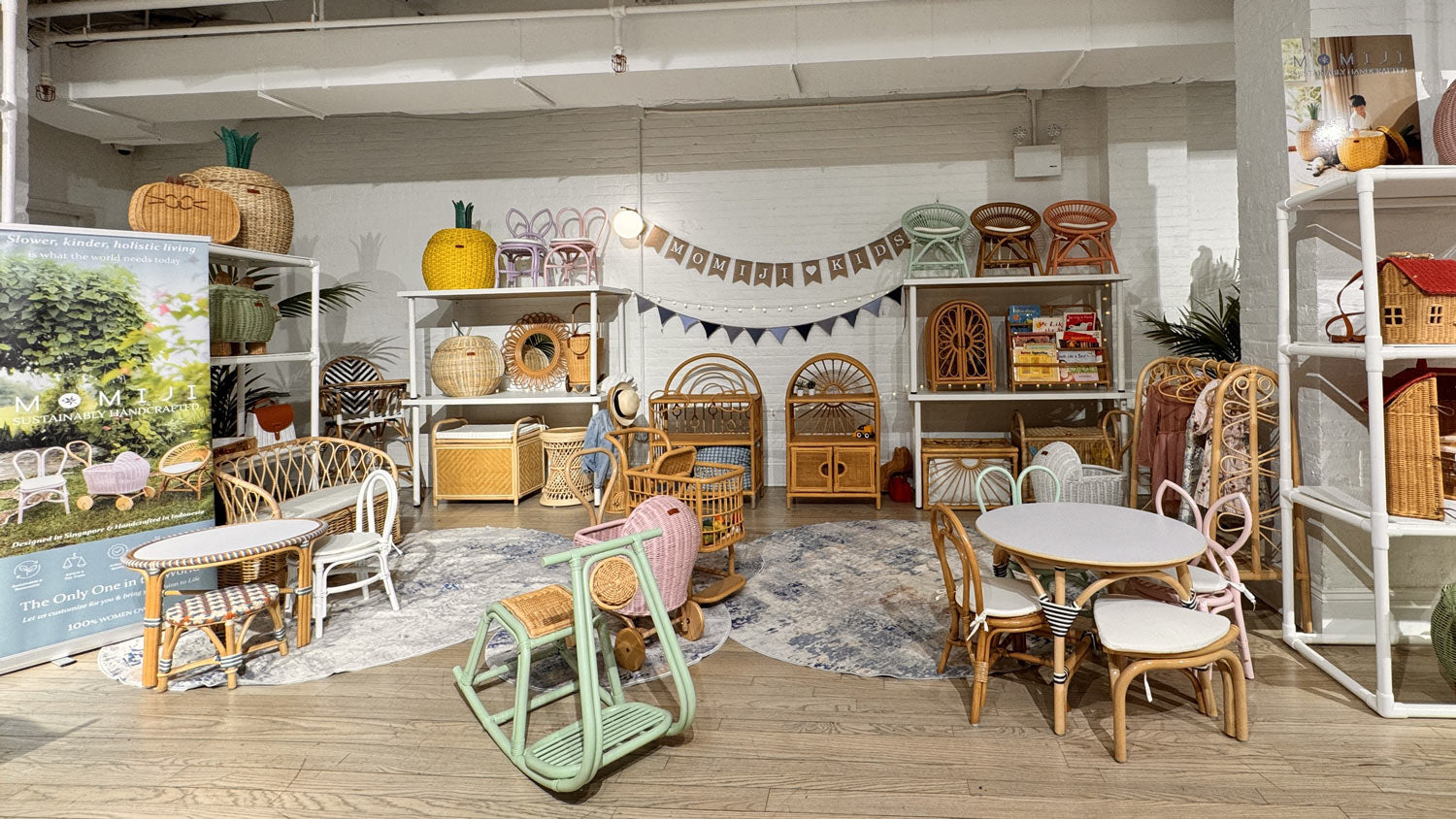
For the lifestyle brand MOMIJI, materials are their key to a sustainable business model. “By sourcing regenerative rattan, a rapidly renewable material that supports forest ecosystems, and partnering with skilled Indonesian artisans to preserve traditional crafts and uplift rural communities, our business model upholds the 4 pillars of sustainability,” explained this Singaporean brand’s co-owner, Cissy. Having started as customers, Cissy and her business partner, Jasmine, recently took over the high quality, bespoke label. They continue to uphold its principles of sustainability, with Cissy explaining that they see a reflection of themselves and their children in the families that buy MOMIJI.
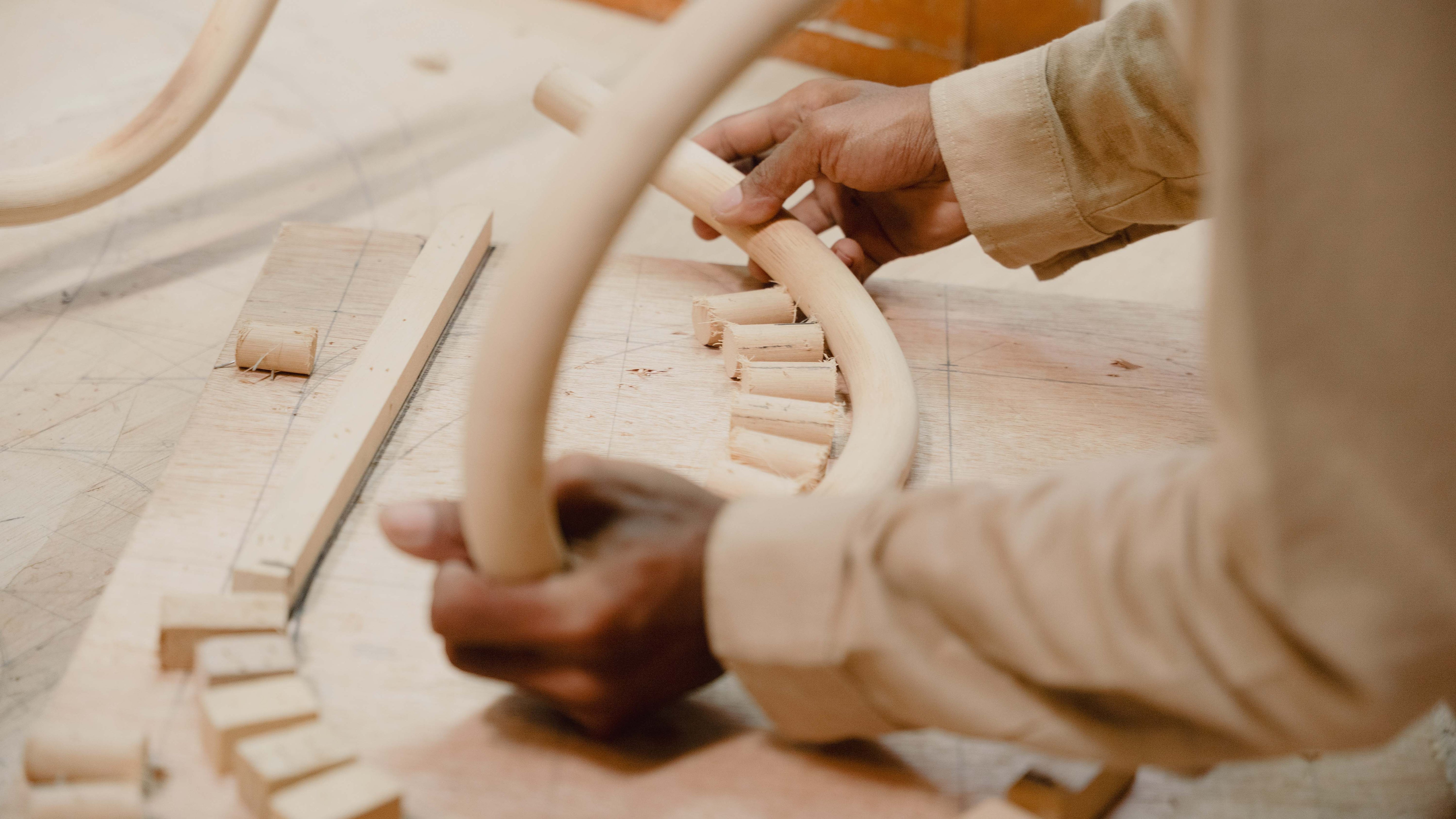
“We believe every product should nurture, not harm,” she continued, in reference to both children themselves and the environment they will inherit. Momiji works with three trusted suppliers whom they allocate designs to according to their unique strengths. Their handcrafted products can take up to 40 hours to create, preserving intangible human skills within vulnerable communities. This also allows customers to customize their orders, adding even more value to their products. The human hands behind each item add to the value, while rattan allows for the products to be repaired. Cissy and Jasmine work closely with their suppliers to ensure the safety and care of the people making them, and those who will enjoy them for generations. Though not certified yet, MOMIJI has begun the process of getting formal certifications. They’ve identified this as an important step as they expand into the global market.

THE CHALLENGES Of sustainability for kid’s brands
Now that we’ve explored some of the solutions, let’s talk about some of the challenges, such as how sustainable choices tend to tighten profit margins. “It is much harder to pivot and take advantage of new opportunities for revenue, as our business models are built for long term impact rather than short lived fads,” explained Cissy from MOMIJI. Veja’s team can understand this, as a brand that is growing globally without investors. Their team told us that by eradicating advertising costs, the brand manages to have a margin that, while smaller than their competitors, is enough to be profitable.
In Catherina from Mini Rodini’s opinion, balancing ambition and reality is the biggest challenge. “We’re constantly navigating limited options, high costs, and systemic industry challenges,” she said. Mogens of Molo echos this challenge, saying “We’re constantly pushing for progress, but it’s a journey of continuous improvement rather than a quick fix”.
We find that Cecilia from Bobo Choses has perfectly summarized the feeling a lot of us can have when it comes to sustainability: “Sometimes, we feel like a small fish swimming in a big ocean,” she said. “In the end, we’re all in the same boat. It is more natural to row in the same direction,” she concluded, ending on an optimistic note.
Let’s talk about price
It’s no secret that with certifications, responsible raw materials, and all the other ways to incorporate sustainability for kid’s brands, there comes a cost. But, as each brand will tell you in their own way, the final price is a reflection of the product’s value. “Sustainable production does affect the price,” said Janet of Grech & Co. “But in ways we believe are worth every penny. The result is something that is more than just a product. It’s a mindful, meaningful investment,” she continued.
“We see it as paying the real cost, rather than cutting corners,” explains Catherina of Mini Rodini. Snug’s Inês calls to mind the fact that their products are made by skilled artisans, a fact that influences the final price as well as the expert quality. Cecilia from Bobo Choses emphasizes this point, saying “The supply chain is long, and in every stage there is a human involved”. Cissy from MOMIJI agrees with all of these points, noting that “Our high quality, handcrafted, heirloom pieces will always be in a higher price bracket because they have been designed with longevity in mind”.
Keys to sustainability for kid’s brands, according to these nine
The common advice offered by brands is storytelling, said to us first by Inês from Snug. Janet acknowledges that this is an area she herself can put more work into for Grech & Co. Bobo Choses, while an expert at storytelling, says accountability, openness, and honesty are really important. Emily from Gray Label reminds us to make it relatable, to talk about the conscious choices that benefit people and the planet rather than getting too technical. MOMIJI’s Cissy agrees, encouraging “personalizing” the message and putting a focus on the benefits to customer’s home, loved ones, and their bottom line by investing in a product that will last several lifetimes. Studio Koter agrees, saying the practical benefits are key when communicating on sustainability for kid’s brands.